Compost from blue mussel residues
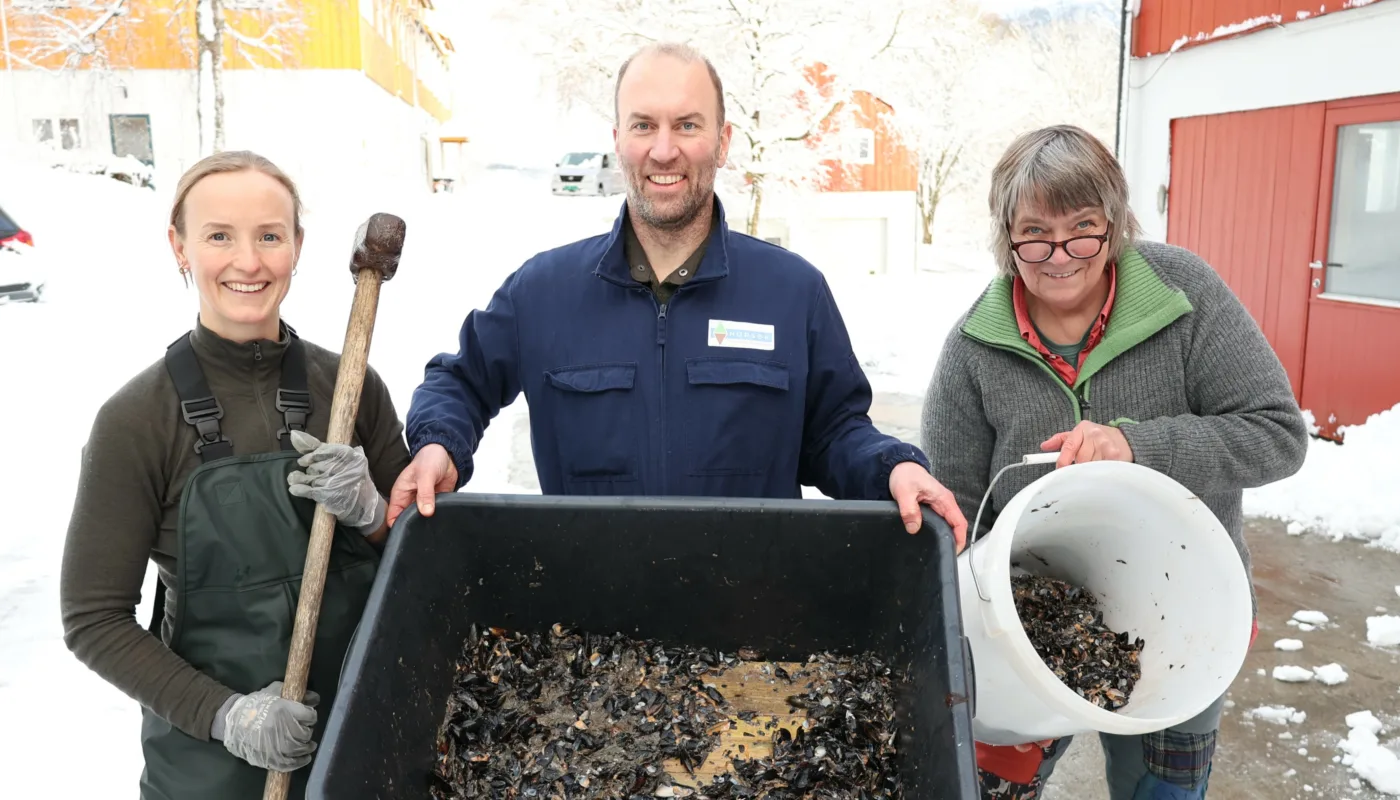
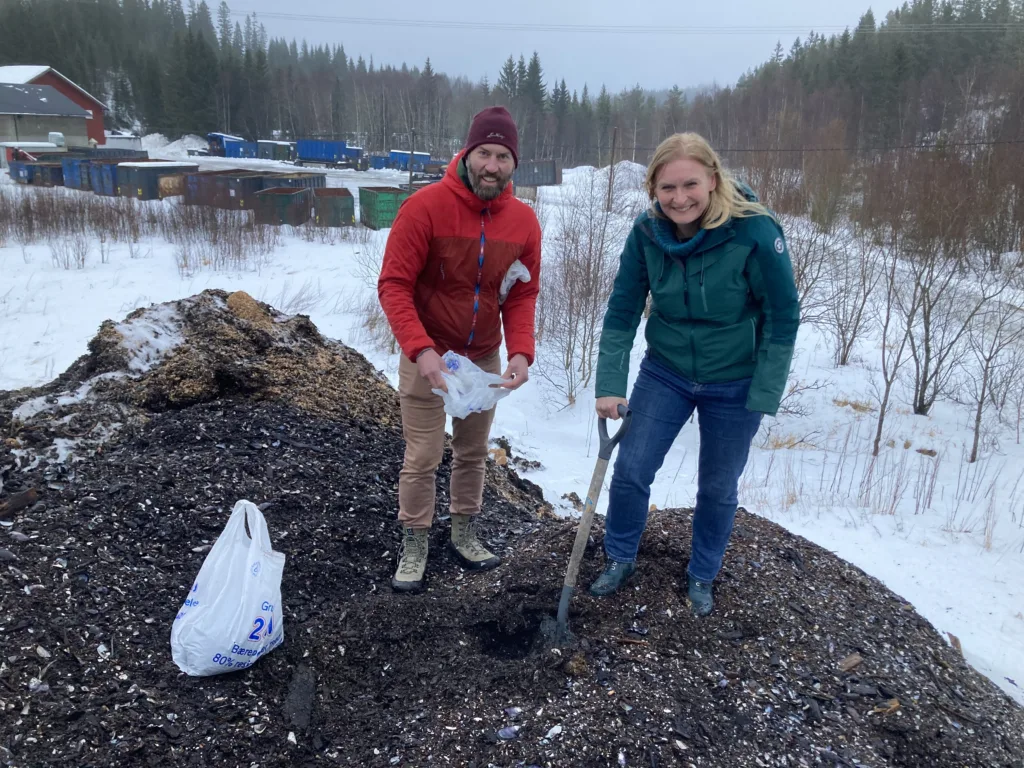
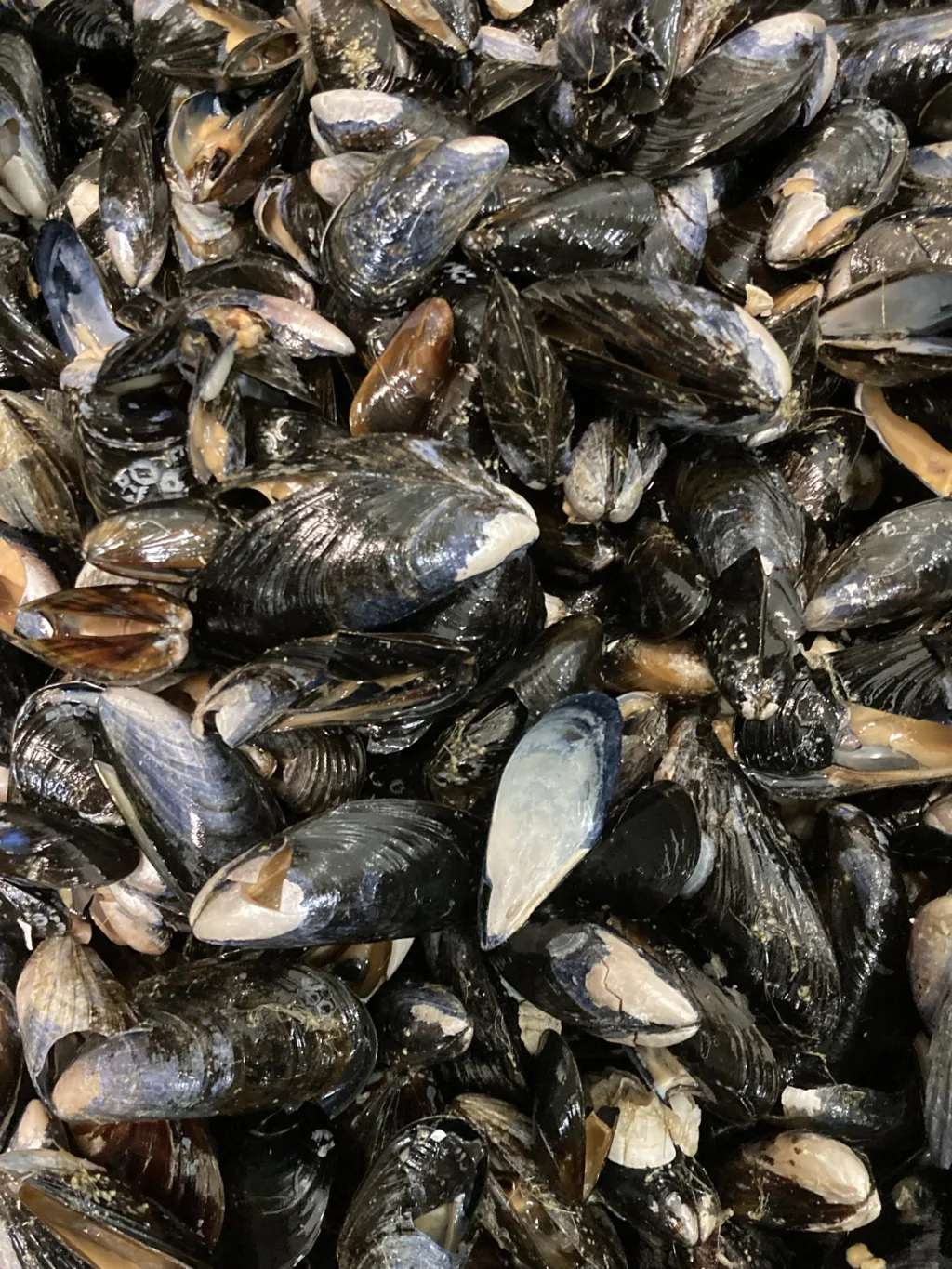
Norgeskjell AS on the coast of Trøndelag is the largest producer of edible blue mussel in Norway and exports this popular seafood to many countries throughout the year. Residues from the production, such as out-sorted shells, are composted with fine woodchips, and is a good fertiliser after appropriate maturation. NORSØK is studying how the composting and use of compost as fertiliser may be improved.
Better compost with ground shells?
Field experiments in the Norwegian Agricultural Extension Service (NLR) Trøndelag have shown a positive effect on plant growth with composted blue mussels. Whole shells are demanding because they decompose very slowly. The coarse structure may hamper a good sanitation of the material, which is an animal by-product, which must be maintained at a temperature > 55 °C for over 3 weeks. When applied in a garden, could whole, blue shells disturb the visual impression? When applied in agriculture, could the shells possibly clog the openings of the seed or fertiliser hoes? NORSØK will study the effect of grinding the shells before composting, and the performance of traditional and optimized compost applied to crop plants.
Blue gardens?
In collaboration with Koteng holding AS in Trondheim, NORSØK will study the effect of blue mussel compost when applied in an urban environment, such as in wooden frames for growing of vegetables, or applied as a dressing to lawns in recreational areas. Will the appearance of blue shells be disturbing, or can this be regarded as a positive visual element in a city located along the coast? May the compost have a positive effect on earthworms, improving the soil structure? Or perhaps repel slugs?
The project is funded by the Regional Research Council of Trøndelag and a public tax deduction scheme for companies. It is carried out in collaboration with NLR Trøndelag who will conduct field studies and provide knowledge on local conditions.
Project Details
Project details
| Project coordinator: | Anne-Kristin Løes |
|---|---|
| Project staff NORSØK: | Joshua Cabell |
| Project partners: | Norsk Landbruksrådgivning Trøndelag SA |
| Funding: | Skattefunn |
| Project period: |